

.png)
Key takeaways:
- Compared with 2015, reading scores are down in 83% of U.S. school districts, and math declines are nearly as pervasive.
- A panel of 37 researchers surveyed by The New York Times rated small group tutoring as the most effective out of 30 ideas for fixing U.S. schools.
- Execution matters. Every idea was rated assuming it was “done properly,” and tutoring is one of the pricier options, so programs that run it well see the most benefit.
- Falling scores aren’t a lost cause. Technology that connects students with great tutors is making strong tutoring easier to reach.
Experts ranked 30 ways to fix U.S. schools
American students are struggling with reading and math. This isn’t a new problem. Compared with 2015, reading scores are down in 83% of U.S. school districts, and math declines are almost as widespread. The pandemic made matters worse, but the slump started well before it.
So what actually helps? That’s the question The New York Times set out to answer in its recent article, 30 Ideas for Fixing U.S. Schools. The paper asked 37 top education researchers, from universities like Harvard, Stanford, and Brown, to rate 30 ideas for effectiveness and cost on a scale from 1 to 7.
The idea they rated most effective was small group tutoring, and if you teach or tutor yourself, that probably won’t surprise you much. Anyone who’s given or received personalized tutoring knows how resilient students can be when they’re given the right amount of support and attention. It’s good to see the research catch up with what educators already know.
Why small group tutoring came out on top
Small group tutoring scored 6.0 out of 7 for effectiveness, the highest of all 30 ideas. The science of reading came second at 5.3, followed by universal pre-K, more per-student funding, and higher pay for teachers at high-poverty schools, all at 4.8.
Specifically, the experts offered the strongest support for frequent, small group tutoring during the school day for the students who need it.
The reason an intervention like this works is the level of attentiveness it affords educators. In a class of 25 or 30, even the world’s best teacher won’t be able to stop for every student who’s lost.
Interestingly, the panel was less convinced by smaller class sizes; it scored 3.8 for effectiveness and was ranked as one of the least cost-effective ideas. This is partly because the academic benefits don’t show up until classes get down to around 15 students, a difficult target to achieve at scale.
Yet in a group of three or four, the tutor has the capacity to see where each child is struggling and support them closely until the concept clicks.
Small groups also embody some of the traits that make classroom teaching so good. Students can hear each other’s questions, explain their ideas out loud, and learn from each other’s mistakes. It also improves upon one-to-one sessions in that a solo tutor working with several students can reach more kids than what’d otherwise be possible.
For schools working with tight budgets, that's no small thing. The experts rated small group tutoring 5.2 out of 7 on the cost scale, so while it may be the most effective intervention on the list, it's also one of the pricier ones. Getting more students in front of each tutor is one of the simplest ways to make it more affordable.
What is high-dosage or high-impact tutoring?
When researchers talk about the tutoring that moves the needle, they usually mean high-dosage tutoring, also known as high-impact tutoring.
It’s important to note that not every tutoring program necessarily counts as high-dosage. The strongest programs tend to share a few things, according to the National Student Support Accelerator:
- Frequent sessions. Three or more sessions a week, rather than occasional or ad hoc drop-ins.
- Small groups. One-to-one is optimal, and ideally no greater than one-to-four.
- The same tutor every time. Students can build a rapport with a tutor who understands their unique learning needs.
- Time built into the school day. Students don’t have to opt in after school.
- Lessons that are tied to what’s happening in class. Tutoring is woven directly into the curriculum, rather than running alongside it.
This aligns almost completely with what the NYT’s panel put forward. It’s also where the name comes from: tutoring has the most impact when it’s frequent, consistent, and personal.

How to put small group tutoring into practice
The experts rated every idea on the list based on the assumption that it was “done properly,” and they were clear that the details make or break it. In fact, Marguerite Roza of Georgetown’s Edunomics Lab went so far as to say, “In practice, simply doing anything well may matter more than any handful of interventions.”
Here’s what doing small group tutoring well looks like, depending on where you sit.
For schools and districts
Start with time. Programs that pull students out of an elective or build tutoring into the schedule will end up reaching far more kids than an after-school option that hinges on sign-ups. From there, focus on the students who need it most, keep groups small, and pair each group with the same tutor for the whole term.
Staffing is usually the hardest piece of the puzzle. Many districts simply don’t have enough qualified tutors nearby, especially in rural areas or for high-demand subjects like math. Online tutoring is a great help for closing that gap, because a tutor doesn’t have to live within driving distance of the school.
For tutoring organizations
Consistency is what makes high-impact tutoring work, and consistency demands a degree of organization. Keep the same tutor with the same group. Track attendance and progress so you can spot students who are falling behind. Offer tutors shared lesson materials so that quality doesn’t depend on who’s teaching that day.
For independent tutors
If you currently teach one-on-one exclusively, then it’s worth looking into establishing small groups. You can help more students in the same hours, and families often find group sessions easier to afford. Start with students at a similar level, working on the same skill. That way, everyone in the group can learn from every part of the session.
The tools matter more than you’d think
Online small group sessions only work if your tutoring software can handle everything the task requires. Students need to join quickly, see the same whiteboard, and work on problems together. Tutors need to see who’s following along and who’s struggling.
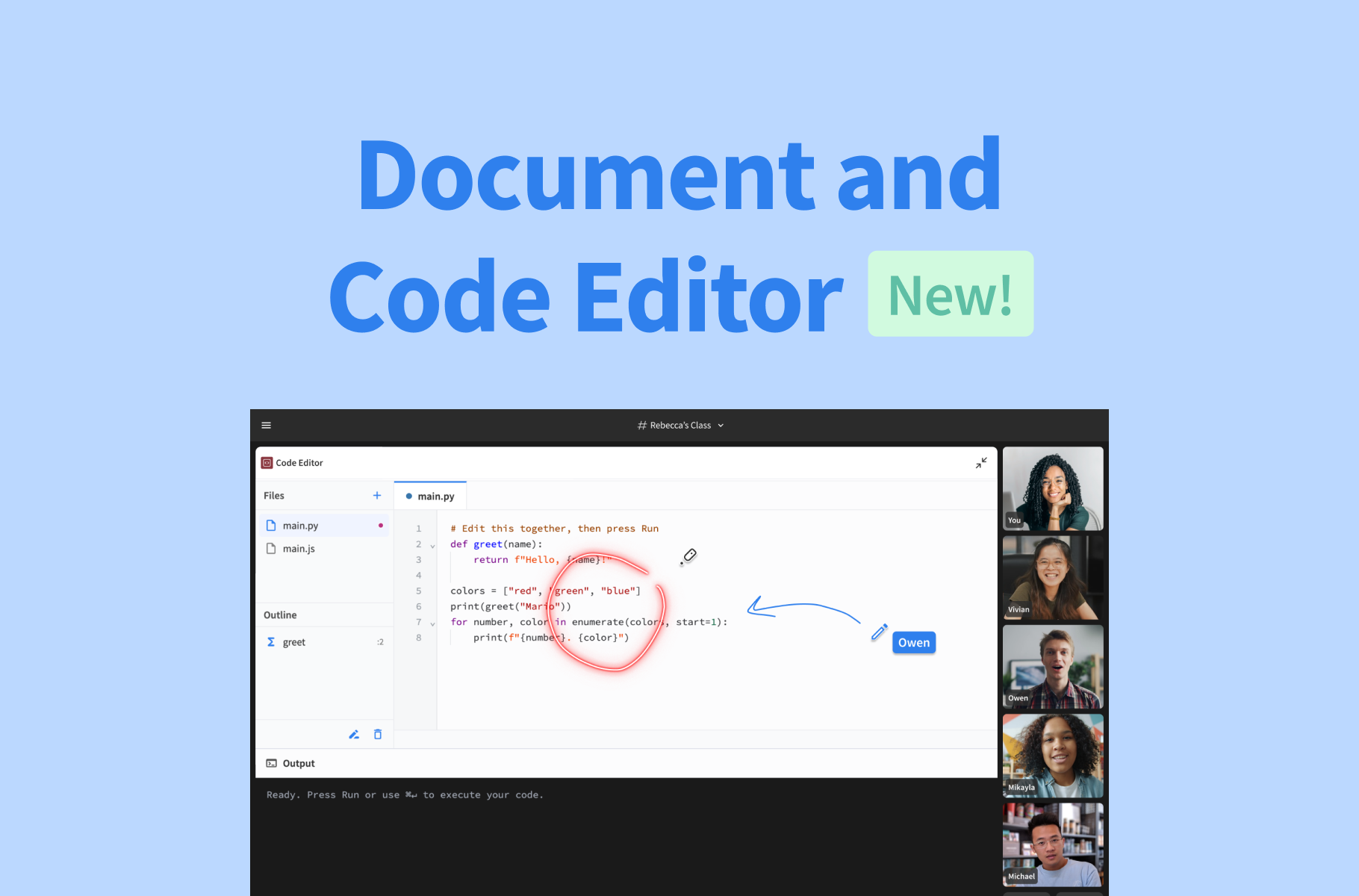
That’s the kind of virtual classroom we build at Pencil Spaces. We made it for tutors and teachers running live small group sessions, so the focus stays on teaching rather than troubleshooting.
Whatever you use, be sure to pick tools made for teaching, not for business meetings.
This isn’t a lost cause
It’s natural to feel disheartened by a decade of falling test scores, but the NYT’s findings offer real hope. Mississippi and Louisiana are already climbing the national rankings by sticking with evidence-backed strategies. And the panel was clear about what helps most: regular, focused time with a tutor in a small group.
That makes interventions like small groups and high-dosage tutoring our kids’ best shot at catching up. The hard part is ensuring every student who needs it can access it.
Nobody knows exactly what schools will look like in ten years. One thing that’s clear is that experts aren’t sold on educational technology being used to replace teaching. Personalized learning software and allowing A.I. use both ranked in the bottom third.
That said, where technology does help is in connecting students with great tutors. Today, a student in a small town can work with a math tutor two states away. A district short on staff can still give struggling readers three sessions a week. As barriers to accessibility are broken down, strong tutoring can impact more of the kids who need it most.
The students falling behind today aren’t stuck there. With the right help, they can catch up, and more of them can get that help than ever before.
Running small group tutoring sessions, or planning to? Pencil Spaces gives you a virtual classroom built for live, interactive teaching. Try it free today and host your next small group session, or book a personalized demo to see how it can fit your program’s needs.