

.png)
Key takeaways:
- High-dosage tutoring involves frequent, consistent tutoring sessions conducted with small groups or one-on-one.
- Research indicates that high-dosage tutoring can lead to substantial academic gains, particularly for students from low-income communities and those who are struggling academically.
- Online high-dosage tutoring can make it easier to scale more intensive tutoring programs by solving problems surrounding staffing, scheduling, and accessibility.
What is high-dosage tutoring?
High-dosage tutoring is a structured approach to academic support that offers consistent, frequent tutoring to students over an extended period of time.
The exact format usually varies, depending on different factors. Some programs use one-on-one tutoring, whereas others work with small groups of students. The sessions themselves might happen before or after school, during the school day, or even during breaks between semesters or school years.
As a 2021 report from EdResearch for Recovery emphasizes, the true definition of high-dosage tutoring concerns the frequency and consistency of the sessions. The study notes that tutoring is generally most effective when students receive it at least three times a week, or when they participate in intensive small-group programs running over a concentrated period.
In short, the idea is to give students enough regular contact with their tutor for all new concepts to be fully introduced, practiced, revisited, and reinforced.
Is high-dosage tutoring effective?
The evidence for high-dosage tutoring so far is encouraging. It’s especially hopeful for students who are already experiencing academic difficulties.
In a 2023 study published in Economics of Education Review, researchers discovered that high-dosage tutoring programs could be successfully developed and implemented across different educational settings, while maintaining substantially positive effects on student outcomes.
Most notably, they found that targeting low-income communities with scalable high-dosage tutoring programs effectively reduced existing gaps in educational achievement. That makes high-dosage tutoring particularly interesting as an intervention for students affected by the income-achievement gap.
For these students, even one session can give them a useful boost. But with more regular support, they receive considerably more opportunities to identify gaps in their knowledge and address them before they become entrenched. Their tutor can return to difficult concepts as often as needed while tracking progress, and the tutor can adjust future lessons according to how the student performed in the last one.
Of course, more tutoring doesn’t automatically equal better tutoring. For a program to be truly effective, it should combine high frequency with qualified teachers, small student-to-tutor ratios, appropriate academic content, and strong student-teacher rapports.
High-dosage tutoring vs. traditional tutoring

Although it has a different name, high-dosage tutoring isn’t necessarily a different type of tutoring. In fact, most traditional tutors will use many (if not all) of the same teaching methods in their sessions. Instead, the majority of differences relate to the intensity and structure of the programs.
Can high-dosage tutoring be delivered online?
Yes, high-dosage tutoring can be delivered online. In fact, online delivery actually solves a lot of the logistical headaches that are typically associated with scaling a high-dosage tutoring program.
According to a recent 2026 study from Stanford’s National Student Support Accelerator, which draws upon five years of tutoring research, the strongest learning gains tend to come from programs that maintain:
- Frequent sessions
- Small student-to-tutor ratios
- Sustained relationships between tutors and students.
However, the authors also highlight several practical challenges that come with the implementation of high-dosage tutoring at scale. These tend to center staffing, scheduling, and participation.
These three challenges are something that online tutoring can address directly. A virtual classroom allows tutors to work with students who may live miles away, without either of them having to spend time traveling between lessons. Tutoring organizations hire from a much wider pool of tutors across the globe.
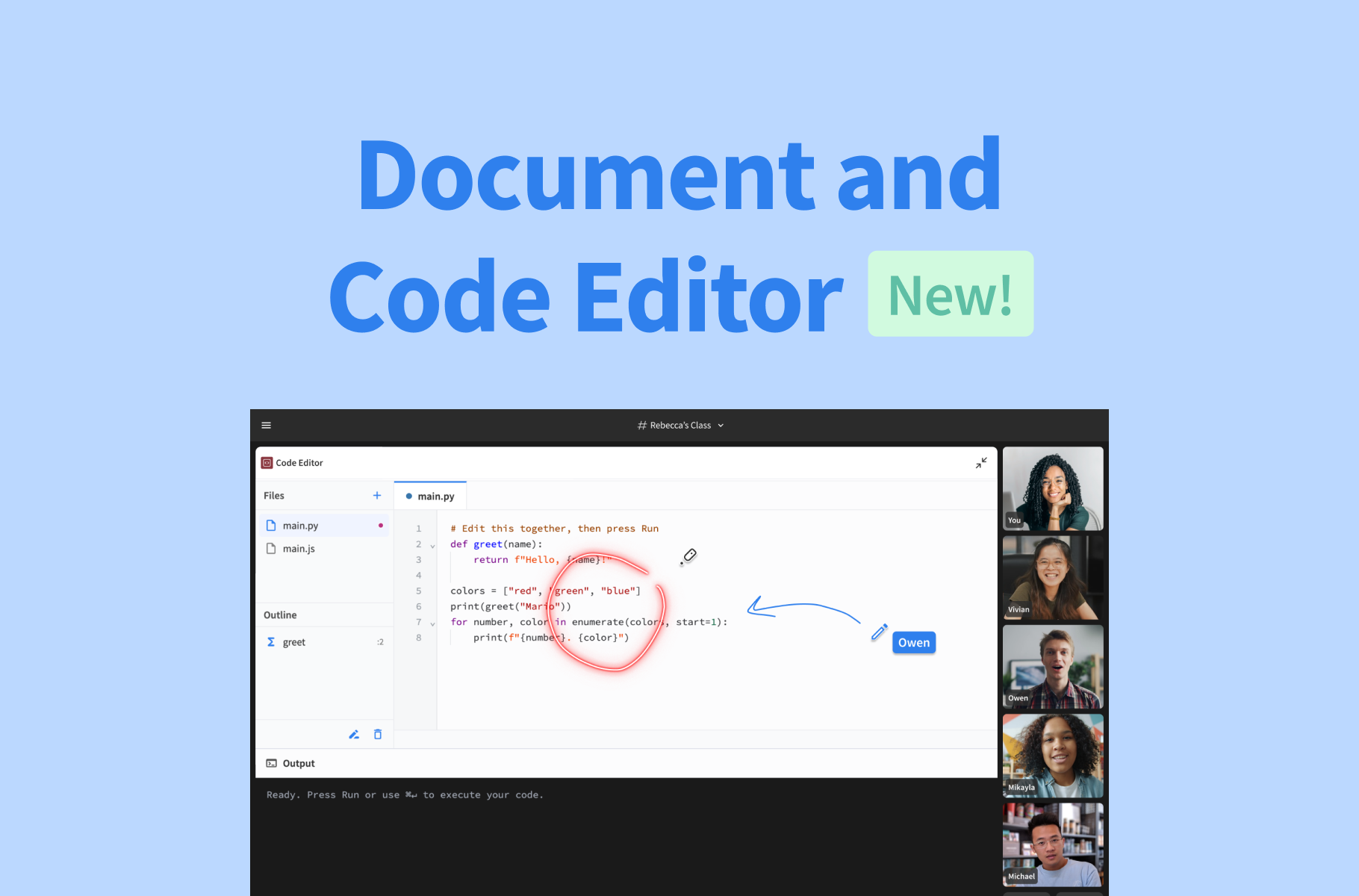
Virtual classroom platforms like Pencil Spaces support this model with features that were designed precisely for frequent, ongoing lessons. In Pencil Spaces, tutors can work with students on a collaborative whiteboard, share resources, use interactive teaching tools, and keep lesson recordings available for later review.
For organizations that deliver high-dosage tutoring at large scales, these are the kinds of tools that make day-to-day running of the program considerably simpler.
Online high-dosage tutoring also removes what’s arguably the greatest barrier to access: geography. A student no longer needs to live in close proximity to a tutoring center, nor does a tutoring organization need to maintain a physical classroom in every community that it serves.
It’s still important to remember that online delivery won’t always be the perfect solution for every student or every program. However, if frequent tutoring, small groups, and consistent tutor relationships are your overarching goals, whether as a parent, a student, or a tutor, then online high-dosage tutoring can make those factors much easier to deliver at scale.
Frequently asked questions
How often should high-dosage tutoring take place?
High-dosage tutoring programs usually entail three or more tutoring sessions per week, give or take depending on the program and students’ needs. The single most important defining factor for high-dosage tutoring is consistent, frequent contact.
Is online high-dosage tutoring as effective as in-person?
Online high-dosage tutoring can be very effective if the program can maintain the core tenets that are associated with strong tutoring outcomes: frequent sessions, small student-to-tutor ratios, high-quality teaching, and sustained relationships. If anything, online delivery makes these academic programs much more accessible and easier to scale, effectively making these tenets more feasible to maintain.
Who benefits the most from high-dosage tutoring?
High-dosage tutoring can be beneficial to many different kinds of learners. That said, recent research has observed particularly promising results for students from low-income communities who are affected by the income-achievement gap. The intensive format gives these students more opportunities for targeted instruction, practice, feedback, and ongoing support.
Interested in starting to deliver high-dosage tutoring online? Pencil Spaces gives tutors and tutoring organizations a purpose-built virtual classroom for frequent, engaging lessons. Try Pencil Spaces for free, or book a free demo to see how it can support your tutoring program.