
.png)
Key takeaways:
- New EdTech research emphasizes that technology can improve children’s learning outcomes, but this effectiveness depends heavily on how it’s designed and implemented.
- EdTech works best when its features match the child’s age, the subject being taught, and the way they learn.
- Technology alone doesn’t make a lesson better. Thoughtful lesson design is still vital for tutors and educators who want to get the most out of educational technology.
New educational technology research
Educational technology has changed drastically in recent years. Today’s children can now learn through interactive apps, virtual reality, educational robots, AI tools, adaptive software, and digital classrooms that, just a few decades ago, would have seemed like gadgets out of science fiction.
Given this influx, educational researchers are increasingly skeptical about one thing: is all this novel technology actually helping children learn? This is precisely what a new 2026 scoping review from the Digital Futures for Children Centre (DFC) at the London School of Economics and Political Science sought to uncover.
After 56 separate meta-analyses of over 2,100 individual studies, the overall picture of the state of modern EdTech is cautiously positive. The authors observed measurable improvements in learning outcomes for school-aged children in direct relation to educational technology.
There is one major catch, though: these benefits depend heavily on how the technology is designed, implemented, and integrated into teaching. This means that the impact of educational technology is a much more complicated question than what we originally imagined.
Here’s how the researchers answered it, and what it means for tutors and educators.
The impact of educational technology
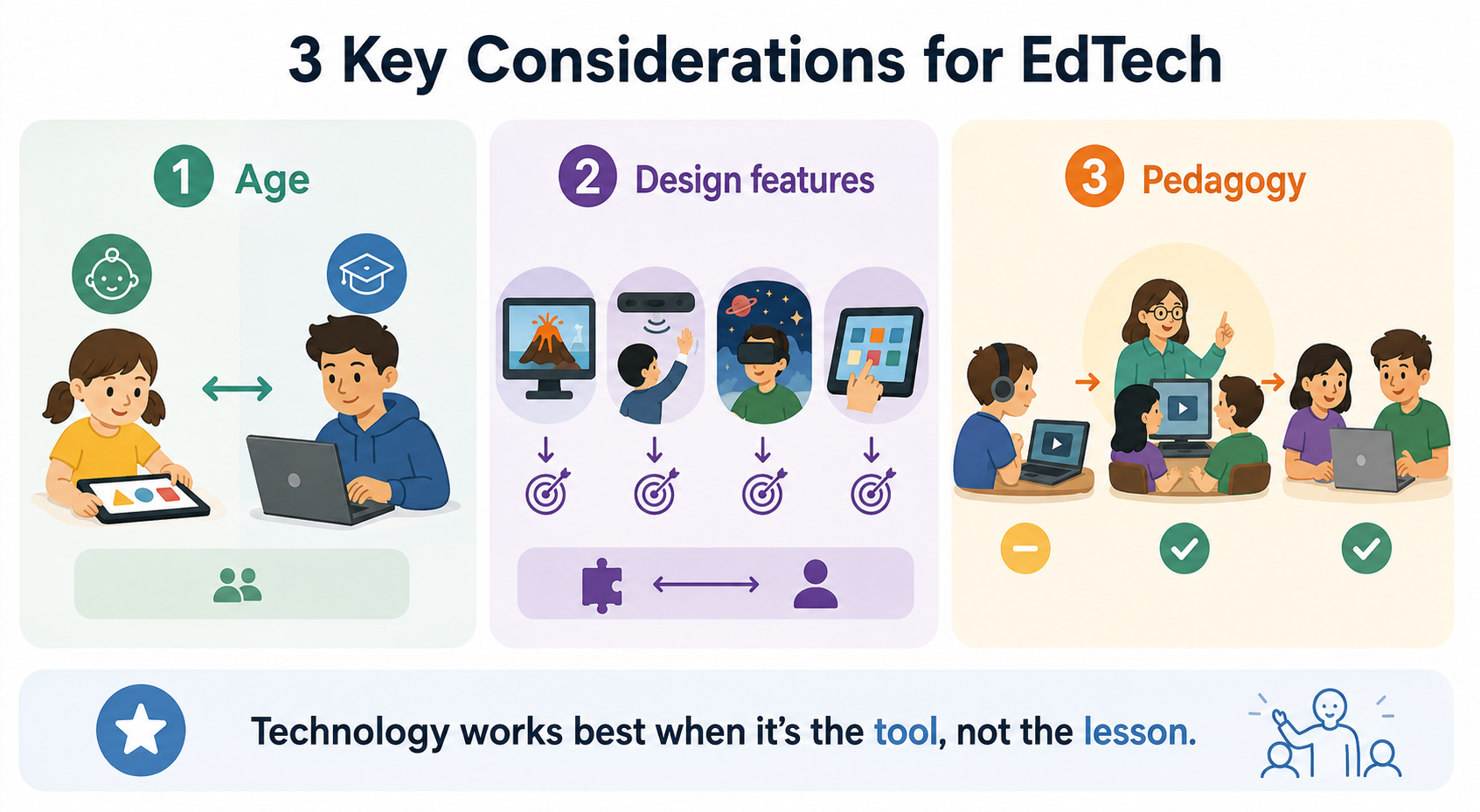
The findings of the 2026 study put forward three important considerations for educators to make before implementing educational technology: which age group it’s for, how it’s been designed, and how it’s used by teachers and students.
1. Age
Children in different age groups have vastly different needs and capabilities in relation to their development. As such, educational technology needs to account for the discrepancies between what children are cognitively, physically, and socially capable of at their stage of development.
As the researchers discovered, EdTech tools’ effectiveness varied considerably between age groups. Some technologies produced stronger learning outcomes among older children, whereas others appeared more effective with younger learners.
The takeaway for educators is fairly straightforward: remember that what’s appropriate for one age group won’t necessarily be appropriate for another.
2. Design features
The authors also found that, regardless of how impressive technology seems, it can still be the wrong tool for a particular lesson. Beyond the developmental abilities of the children using the technology, the design features also need to match the learning domain.
Virtual experiments, for instance, were shown to lead to stronger results in humanities and social sciences than in natural sciences. Similarly, motion-sensing technologies had larger effects in non-STEM subjects than in STEM. Even different types of virtual reality had varied results depending on the context.
This finding reminds us that technological sophistication doesn’t equate to educational value. In many cases, simpler really is better. For children with special educational needs and disabilities, for example, the straightforward touchscreen interaction offered by tablets may be easier to use than technology that demands a keyboard and mouse.
Unfortunately, this means that there isn’t a universal design that can be applied broadly to all lessons for all children. Instead, the best design an educator can leverage will be the one that fits both the learner and their tasks, rather than the one with the longest list of impressive features.
3. Pedagogy
Arguably the most important finding was that technology works best when it’s part of a good lesson. More specifically, the researchers observed that EdTech was most useful when it was used alongside active, collaborative, and contextually grounded teaching approaches.
In other words, thoughtlessly putting technology in front of a child and expecting it to produce better learning isn’t a reliable strategy. The educator also needs to be actively involved in the process; the technology should never be considered the lesson itself.
Instructional videos, for example, had the strongest effects when they were incorporated into teacher-led lessons. These effects weakened when students watched videos independently outside class, without added instruction from a teacher.
By and large, students benefited more when the technology gave them something meaningful to do, rather than simply something to look at. This principle was a near-constant across several forms of EdTech.
That has an important implication for online tutors and teachers. As the research shows, your expertise still matters more than anything else. While technology can give you more ways to explain and collaborate with your students, it still works best when you’re the star of the show, not the tech. Your active involvement in the learning process is still paramount to your students’ success.
How tutors and teachers can maximize the benefits of EdTech
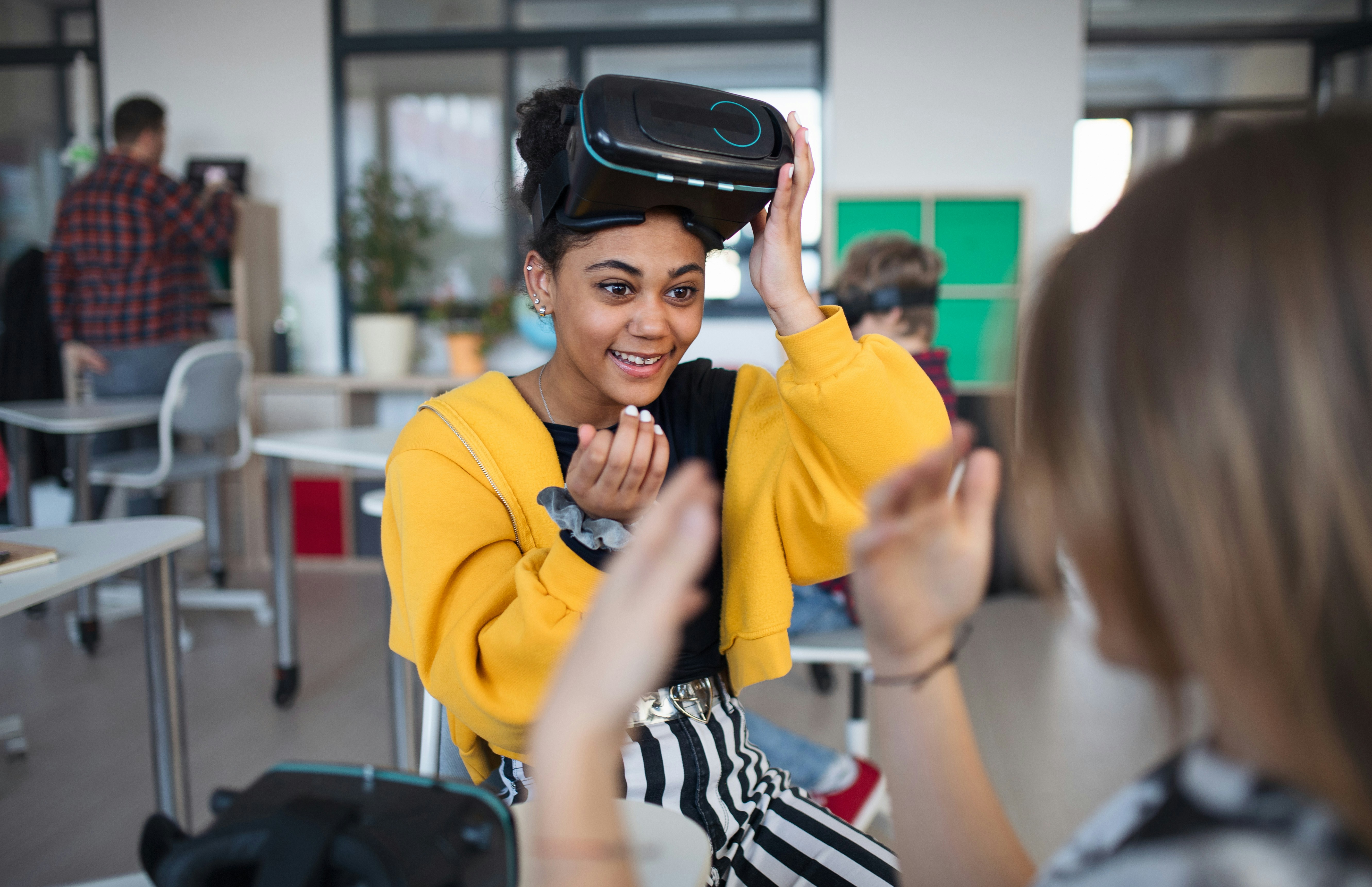
Most of today’s educators can attest to how easy it is to get distracted by shiny new tools. AI tutors, immersive VR, adaptive learning platforms, and an endless stream of new educational apps all sound exciting and promising.
Although some of the excitement surrounding these tools is certainly warranted, always remember to consider your students’ needs first, then the tool second. Technology doesn’t become educationally valuable by virtue of being new, expensive, or stacked with features.
Before introducing something into a lesson, ask yourself some simple questions about the technology, your teaching, and your student:
- Does it suit my student’s age and abilities?
- Will it actually help me with the subject I’m teaching?
- Will it make my students more active and involved in lessons?
- Does it solve a problem I currently have?
If the answer to these questions is mostly no, then you most likely don’t need another tool.
If you’re an online tutor, the ideal technology should make your day-to-day teaching easier, without getting in the way of it. Depending on the subject, what most tutors need is somewhere (usually a virtual classroom) to explain an idea, work through a problem, share resources, and collaborate with a student. And you shouldn’t have to spend half the lesson figuring out which button does what.
That’s one of many reasons why platforms like Pencil Spaces are so useful. It brings the core tools of an online lesson together in a single virtual classroom: video/audio calling, whiteboards, screen sharing, educational apps, resources, and interactive teaching features. Tutors can use technology to support their teaching while keeping themselves, rather than the technology, at the center of the lesson.
For most educators, the benefits of EdTech are a direct result of what happens between the tool, the tutor, and the student. Good technology won’t steal a teacher’s spotlight, but rather help them make a good lesson easier to deliver. If it does its job well enough, everyone else can get back to the real work of learning.
The right technology should support great teaching, not get in the way of it. Pencil Spaces gives online tutors the tools they need to make lessons more interactive, collaborative, and engaging. Try Pencil Spaces for free, or book a free demo to see how it can support your teaching.