

.png)
Key takeaways:
- The best tools for online teaching should make lessons easier to deliver, not create more work for tutors and students.
- Online tutors typically need tools for teaching, collaboration, scheduling, file sharing, and engagement metrics.
- An all-in-one virtual classroom can reduce the hassle of switching between multiple platforms.
Why choosing the right online tutoring tools matters
As an online tutor, the software you use is one of the most important aspects of your business. Teaching is the product, and your tech is how you deliver it.
If your technology is unreliable, confusing, or even just slightly gets in the way, that’s bound to become part of the student experience, too. A dropped call here, a missing document there, five minutes spent trying to find the right whiteboard... it all adds up.
Thankfully, in 2026, tutors have plenty of options. There are more online tutoring tools today than ever, from sophisticated virtual classrooms to free scheduling apps and AI-powered lesson planning tools. Yet as useful as this abundance is, it simultaneously makes choosing the right setup much more difficult.
If you want to avoid this choice fatigue, it helps to narrow your search before you start looking. To achieve this, you need to consider what your tutoring business actually needs to flourish. Not what looks fancy or what everyone else is using, but what optimally aligns with your workflow.
Essential categories of online tutoring tools
Most online tutors gravitate toward technology that handles similar core tasks: delivering lessons, engaging with students, managing schedules, and preparing for sessions. Although individuals will have slightly different requirements, these are the most common tasks that a tutor needs to be able to execute with their online tutoring tools.
To achieve this, there are six main categories of technology to consider.
1. Virtual classrooms
A virtual classroom is the center of your online lesson. It’s where you and your student will continually meet, communicate, and work together.
Look for features such as reliable video and audio, screen sharing, collaborative tools, persistent lesson spaces, and easy access for students. A good virtual classroom should feel like somewhere you can teach as you would in a real classroom. It shouldn’t feel like a glorified video call.
2. Interactive whiteboards
A whiteboard gives tutors somewhere that they can work through problems, brainstorm, annotate, and visually represent concepts to their students.
For subjects such as math, science, languages, and writing, an interactive whiteboard will often serve as the most useful online teaching tool in your toolkit; the absence of one can negatively impact lesson quality. Some of the most helpful features worth looking for are infinite canvases, drawing and annotation tools, text and shapes, image uploads, and the ability to save the board’s contents.
3. Scheduling
Scheduling tools handle some of the less glamorous parts of tutoring. A good system should allow students or parents to book sessions with you directly. On top of this, it should also manage your availability, send reminders to both you and your participants, and help keep your calendar organized.
As your client list grows, scheduling tools become more and more important. What’s manageable with three students can easily become an administrative nightmare with thirty.
4. File sharing
Online tutors will need to send and receive worksheets, homework, reading materials, presentations, essays, and other resources on almost a daily basis.
A simple means for sharing files is essential for tutors and students to be able to access the materials they need without having to dig through old emails or chat messages. Ideally, the files should live alongside the relevant lesson or student workspace so that everything stays easy to find.
5. Recording
Lesson recordings are essential if you want your students to be able to revisit explanations after a session ends.
This is particularly useful for tutors who deal with complex topics or work with students who benefit from going over material more than once. Administratively, recordings are also a helpful reference point when planning your follow-up lessons.
6. Engagement tracking
Tools that track engagement metrics are great for spotting subtle patterns during a class. For instance, you can track what points a student regularly loses focus at, or what kinds of activities that tend to disengage during.
These kinds of insights are useful for educators who work with small groups or individual students, as they allow for a tailored teaching approach and more informed conversations with parents about their child’s progress.
The best online tutoring platform

After assessing all the categories, resist the urge to immediately start assembling a little software ecosystem: one platform for video calls, another for the whiteboard, something else for scheduling, and another for recording and analytics.
As well-equipped as you’ll be with a stack like this, preparing for a one-hour lesson will be more tedious than necessary. That is, regardless of how good each individual tool is at its unique purpose, you’ll still be stuck with the task of constantly going back and forth between them.
Each one of these transitions costs time, even if only a little. Five minutes spent wrestling with technology might not sound like much, but across dozens of lessons, it adds up. That’s time lost to tech that could’ve been spent practicing or ensuring understanding. More importantly, frequent switching between apps or tabs during a lesson can interrupt the flow of your explanations, or worse, your student’s concentration.
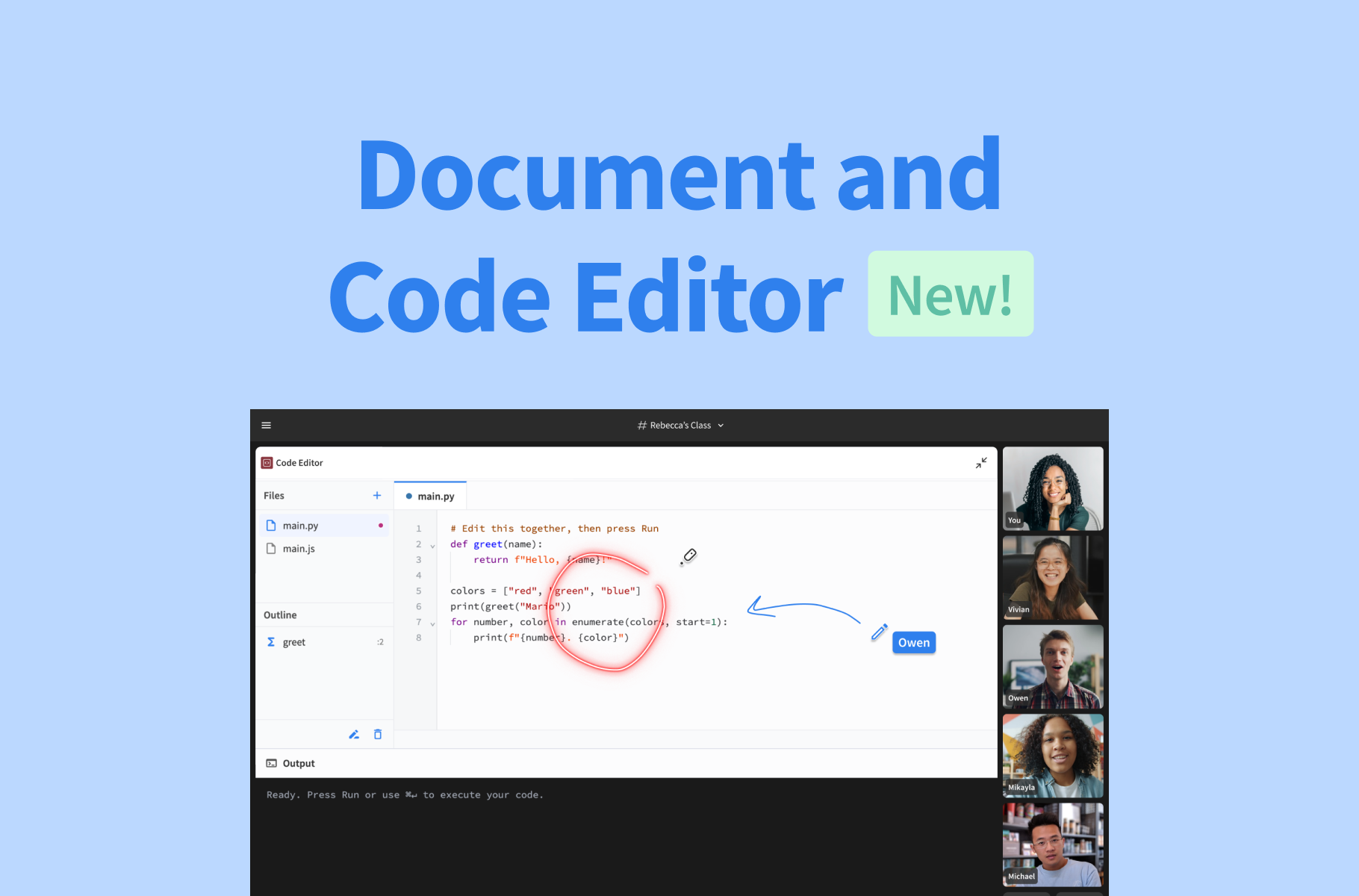
If this is something you’ve struggled with, or something you’re hoping to avoid, an all-in-one platform can make a real difference. Software like Pencil Spaces brings the core elements of online tutoring together into a single purpose-built virtual classroom: meeting students, collaborating on a whiteboard, sharing resources, and keeping your lesson content organized without constantly jumping between apps.
Overall, what’s most important to consider is your unique teaching needs. You don’t need to abandon every specialist tool you use. If you find that something works brilliantly for your particular subject or teaching style, then you should keep using it. The best online teaching tools are the ones that work for you, rather than make you work for them.
Frequently asked questions
What software do online tutors need?
Most online tutors need software for hosting live lessons, working alongside their students, scheduling their sessions, sharing resources, and recording lessons. Depending on the subject they teach and their teaching style, tutors may also benefit from tools for quizzes, educational games, and assessments. You don’t necessarily need a separate platform for every function, as an all-in-one virtual classroom can manage all these different tasks.
Do I need an LMS?
Not necessarily. A learning management system (LMS) is primarily designed to organize and manage learning materials, courses, assignments, enrollments, and student progress. A virtual classroom is designed around live teaching and interaction. For solo tutors who mainly deliver 1:1 or small-group live lessons, a virtual classroom will likely be more useful than a full LMS.
What’s the best online tutoring platform?
The best online tutoring platform depends on what you need from it. Look for a platform that offers reliable live communication, interactive teaching tools, easy resource sharing, and a workflow that doesn't force you to constantly switch between different applications. For tutors who want those core functions in one place, Pencil Spaces provides a purpose-built virtual classroom with all of the above and more.
The best technology should give you more time to teach, not more tabs to manage. Pencil Spaces brings your online tutoring essentials together in one purpose-built virtual classroom. Try Pencil Spaces for free, or book a free demo to see how it can simplify your teaching workflow.